A 15-Minute Learning Routine Kids Can Actually Finish
A good learning routine does not need to take over the evening. Fifteen focused minutes can teach one idea, build confidence, and keep family life calm.
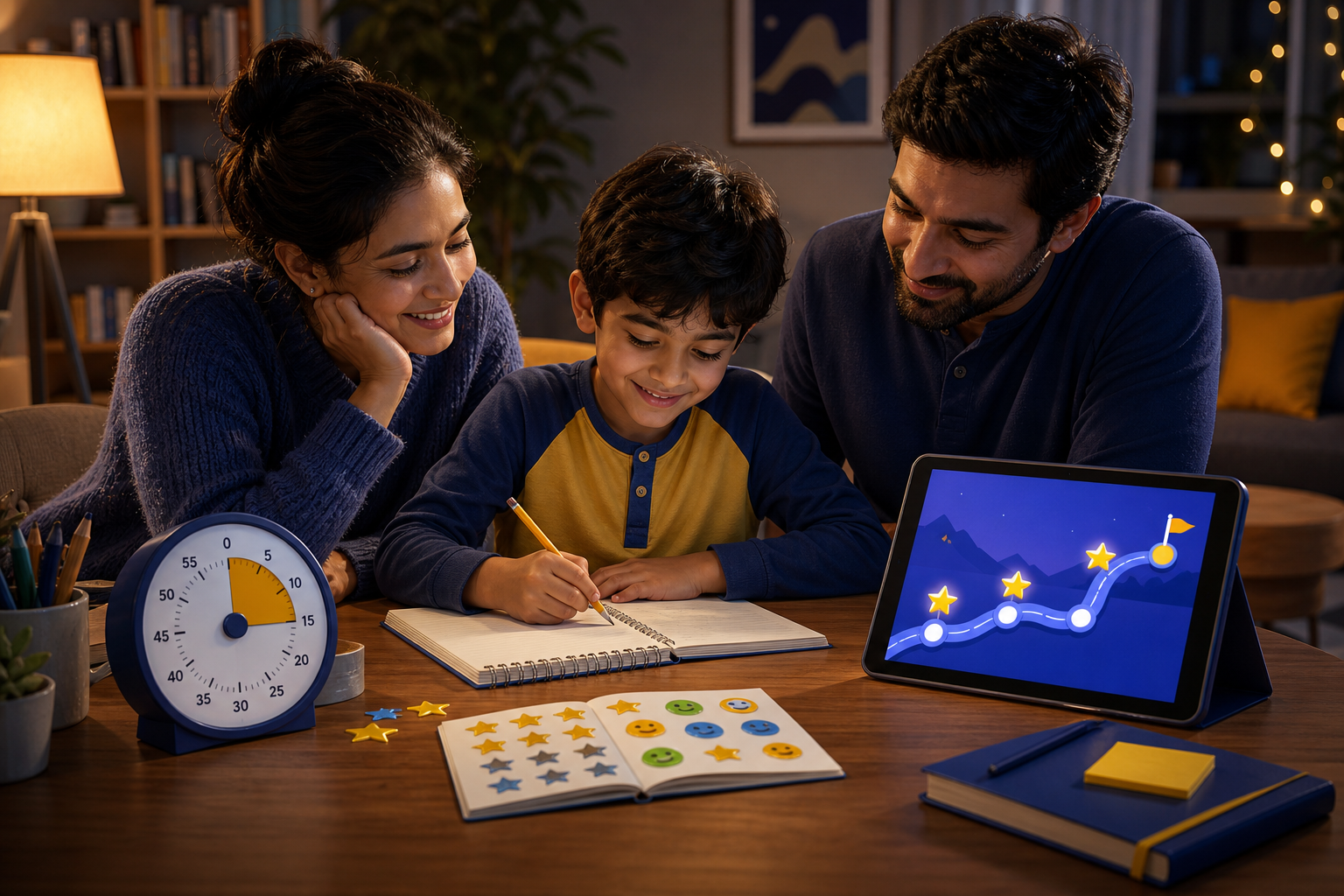
Parents are often told that consistency matters more than intensity. That is true, but it leaves out the hard part: what does consistency actually look like on a normal school night when dinner, bath, messages, and tired kids are all happening at once?
For many families, the answer is not a one-hour study block. It is a fifteen-minute learning routine that has a beginning, a middle, and an end. Short enough to start. Clear enough to finish. Useful enough to repeat.
Minute 0: Choose one tiny goal
The routine starts before the timer. Pick one thing, not a subject. "Math" is too big. "Practice carrying in two-digit addition" is usable. "Reading" is too big. "Find the main idea in one paragraph" is usable.
A tiny goal helps your child know what success looks like. It also protects you from trying to fix every gap in one evening. Tonight's win is one idea learned well.
Minutes 1-3: Warm up with what they know
Start with a question your child can answer. This is not filler. It lowers resistance and reminds the brain where the topic lives.
If the goal is two-digit addition, ask them to solve an easier one-digit problem first. If the goal is main idea, ask what the title makes them expect. If the goal is vocabulary, ask for a word they already know in the same category.
Confidence at the start makes the hard middle more survivable.
Minutes 4-8: Teach one idea only
This is the part where parents accidentally expand the lesson. A child misses one subtraction problem, and suddenly the conversation becomes place value, borrowing, neat handwriting, and "you need to pay more attention". That is too much.
Pick the one idea that matters most. Explain it with one example. Use plain language. Then stop teaching.
The goal is not to cover everything. The goal is to make one thing less confusing than it was fifteen minutes ago.
Minutes 9-12: Practice once without help
The practice step matters more than the explanation. Ask your child to try one problem, one paragraph, one card sort, or one quick quiz without you giving the next move. You can sit beside them. You can encourage. But let them produce.
This is where learning becomes visible. If they can do it, the lesson landed. If they cannot, you have useful information. Either outcome is better than guessing.
Nyro Quest uses this same rhythm inside missions: teach, practice, teach, practice. Quizzes and minigames make learning stick because they ask the learner to retrieve the idea instead of just recognizing it.
Minutes 13-14: Name the win
Do not skip the ending. Ask: "What got easier?" or "What do you understand now?" If the answer is small, that is fine. Small wins are the fuel for coming back tomorrow.
For younger kids, you can connect the win to a visible marker: a sticker, a check on a chart, a completed mission card, or a parent-approved reward. The marker should celebrate finishing the learning loop, not just sitting for the timer.
Minute 15: Stop on purpose
This is the hardest rule for ambitious parents. If the session went well, you will be tempted to keep going. Resist. Stopping while the child still feels capable is how tomorrow's session becomes easier to start.
A routine works when it is repeatable. Fifteen good minutes four times a week beats one heroic hour that nobody wants to repeat. That is the same reason short learning missions beat long courses.
The full routine
- Before the timer: choose one tiny goal.
- Minutes 1-3: warm up with something they know.
- Minutes 4-8: teach one idea with one example.
- Minutes 9-12: practice once without step-by-step help.
- Minutes 13-14: name the win.
- Minute 15: stop on purpose.
That is enough. Not enough for every learning goal forever, but enough for a real evening with a real child. A routine that gets finished can become a habit. A habit can become confidence. Confidence is what makes a child willing to try the next hard thing.
Try Nyro Quest on iOS
Mission-based learning powered by AI. Family Mode for kids 8+ with parent approval, Self-Learner Mode for adults. Nyro Quest is available now on the App Store.